





-
제품

-
애플리케이션
-
서포트
-
AKM 소개



HVAC (Heating, Ventilation, and Air Conditioning)
Gas sensors
CO₂-based air conditioning and ventilation control helps achieve both comfortable indoor environments and energy savings. It can be used in air conditioning equipment, ventilation systems, building automation, smart homes, and more.
HVAC (Heating, Ventilation, and Air Conditioning) refers to systems that manage indoor temperature, humidity, ventilation, and air quality. As buildings become more airtight and energy efficient, there is a growing need to perform air conditioning and ventilation efficiently while maintaining indoor air quality.
CO₂ concentration can be used as an indicator for understanding occupancy and ventilation conditions. By measuring CO₂ concentration and integrating it with air conditioning and ventilation systems, ventilation can be controlled to provide the necessary amount of fresh air where it is needed.
What is Required for HVAC
In HVAC, balancing comfort and energy savings is important. Excessive ventilation can increase air conditioning energy consumption, while insufficient ventilation can lead to poor indoor air quality.
Using CO₂ sensing enables the following types of control.
- Occupancy-based ventilation control
- Understanding ventilation conditions in each space
- Demand Controlled Ventilation (DCV)
- Optimization of HVAC energy consumption
- Integration with building management systems
In DCV based on CO₂ concentration, ventilation rate can be adjusted according to occupancy and ventilation conditions in each space. This helps ensure the required amount of ventilation while reducing air conditioning energy losses caused by excessive ventilation.
Main Use Cases
Air Conditioning Equipment
Indoor CO₂ concentration can be measured and used for air conditioning and ventilation control. Ventilation can be controlled as needed while maintaining comfort.
Ventilation Systems
By adjusting ventilation volume according to CO₂ concentration, indoor air quality can be maintained while reducing excessive ventilation.
Building Automation
Can be used to integrate air quality monitoring and air conditioning control in office buildings, commercial facilities, schools, public facilities, and more.
Duct Measurement
CO₂ concentration can be measured in air conditioning ducts or ventilation paths and used to control the overall system.
Smart Homes
By understanding indoor air quality and connecting with ventilation systems and air conditioning equipment, it helps create comfortable and efficient living environments.
What Gas Sensing Enables
Measuring CO₂ concentration makes it possible to understand ventilation conditions in each space. This enables control according to occupancy and air quality, supporting both comfort and energy savings.
Related Technical Information

Leading the Air of Tomorrow
Learn about air conditioning and ventilation control, comfort, and energy savings using CO₂ sensing.

What is CO₂?
Learn about the basic characteristics of CO₂ and the concept of measuring CO₂ concentration in indoor environments.
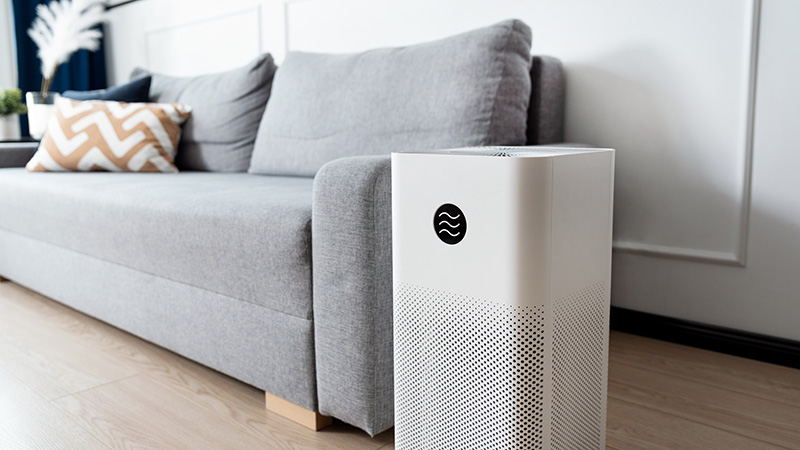
Visualizing air-stagnation by using CO₂ sensor
Introduces technical information related to understanding airflow and uneven ventilation in indoor spaces.
For Product and Technical Consultation
Contact us to discuss applying gas sensing to air conditioning and ventilation control.