





-
Products

-
Applications
-
Support
-
About AKM


For the Safety and Security of Children
Maintaining proper air quality in classrooms is essential for creating an environment where children can learn with confidence.
Not only in terms of the spread of infection, rising CO2 levels are also known to reduce concentration and decision-making ability. Visualizing air quality using CO2 sensors makes it easier to determine when to ventilate and helps create a healthy and comfortable learning environment.
Here, we introduce monitoring cases from schools where our CO2 sensors have been adopted.
CO2 Sensors
Teachers Today
Ventilation is considered a fundamental and effective measure for maintaining indoor air quality, as well as supporting health and concentration.
Schools are actively adopting ventilation, but its effects are not easily visible as numerical data, making it difficult to manage based on the scientific evidence.

Using CO2 Sensors to Create a Clear,
Visual Image of the Growing Use of Ventilation
CO2 sensors are being introduced around the world as a method to visualize the effectiveness of ventilation in schools.
When introducing a CO2 sensor, it is important that it is an NDIR system capable of correctly measuring CO2 concentrations, and that it is portable so that it can be used to easily measure concentrations in different locations.
Case Study: Tagoura Junior High School (Classroom)
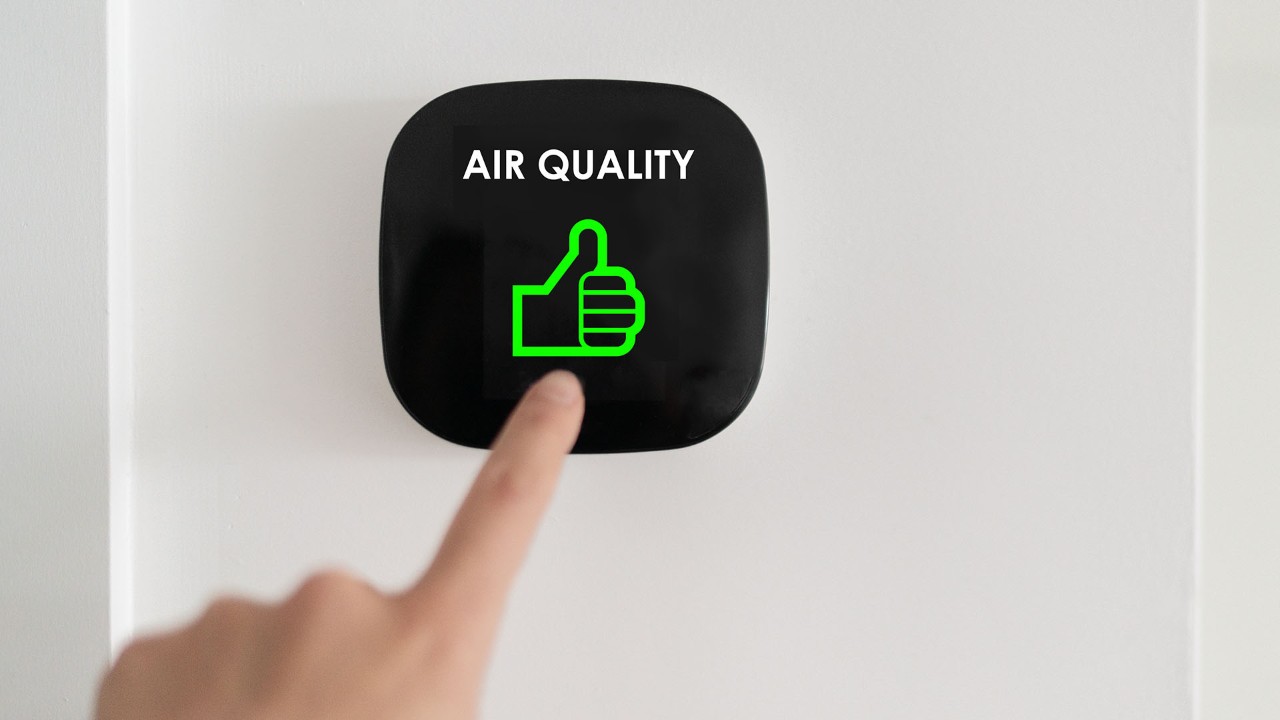
In this case study, we will present the results of a demonstration conducted in cooperation with Tagoura Junior High School on monitoring CO2 concentrations in actual classrooms and the benefits of improved ventilation. The ability to visualize air quality conditions has enabled all classrooms to maintain a CO2 concentration of 1500 ppm or less, the environmental health standard for schools in Japan.

Surprisingly Closed, Crowded and Close-contact Settings Revealed by the Case Study
Apart from classrooms, there are also other areas where crowd density is a cause for concern. It is important to use portable CO2 sensors to identify these sites so that remedial measures can be put in place.

Points to Consider When Installing CO2 Sensors
In order to correctly measure the CO2 concentration in a space, it is important that the sensor not be directly exposed either to the exhaled respirations of humans, nor outside air. In this section, we will introduce actual case studies to explain how to use CO2 sensors.
About Senseair
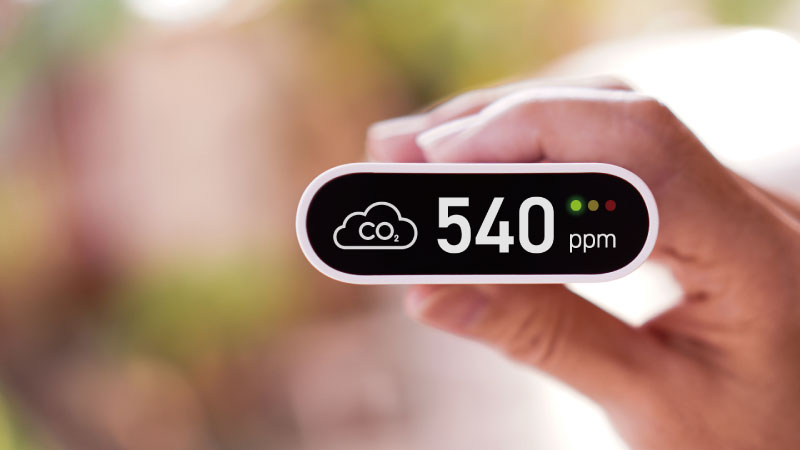
Senseair, which became a member of the Asahi Kasei Microdevices (AKM) Group in 2018, is a provider of gas sensors using NDIR: Non-Dispersive InfraRed technology. Our goal is to constantly develop and mass-produce new gas sensor technologies.