





-
Products

-
Applications
-
Support
-
About AKM


Teachers Today
Ventilation in classrooms is essential not only as an infection control measure but also for maintaining an environment where children can focus and learn effectively. However, it is difficult to quantitatively verify how much ventilation is actually taking place, and teachers currently rely largely on their intuition.
CO2 Sensors
Ambiguity About How Well Spaces are Ventilated
If we consider only infection control, remote learning at home could be an option. However, schools provide valuable experiences such as interpersonal relationships and club activities that can only be gained through face-to-face interactions.
Teachers have long been working to create a safe learning environment for children. Among their strategies, ventilation has been widely adopted as a simple and low-cost measure. It not only helps prevent the spread of infections but also improves classroom air quality, supporting students’ concentration and comfort.
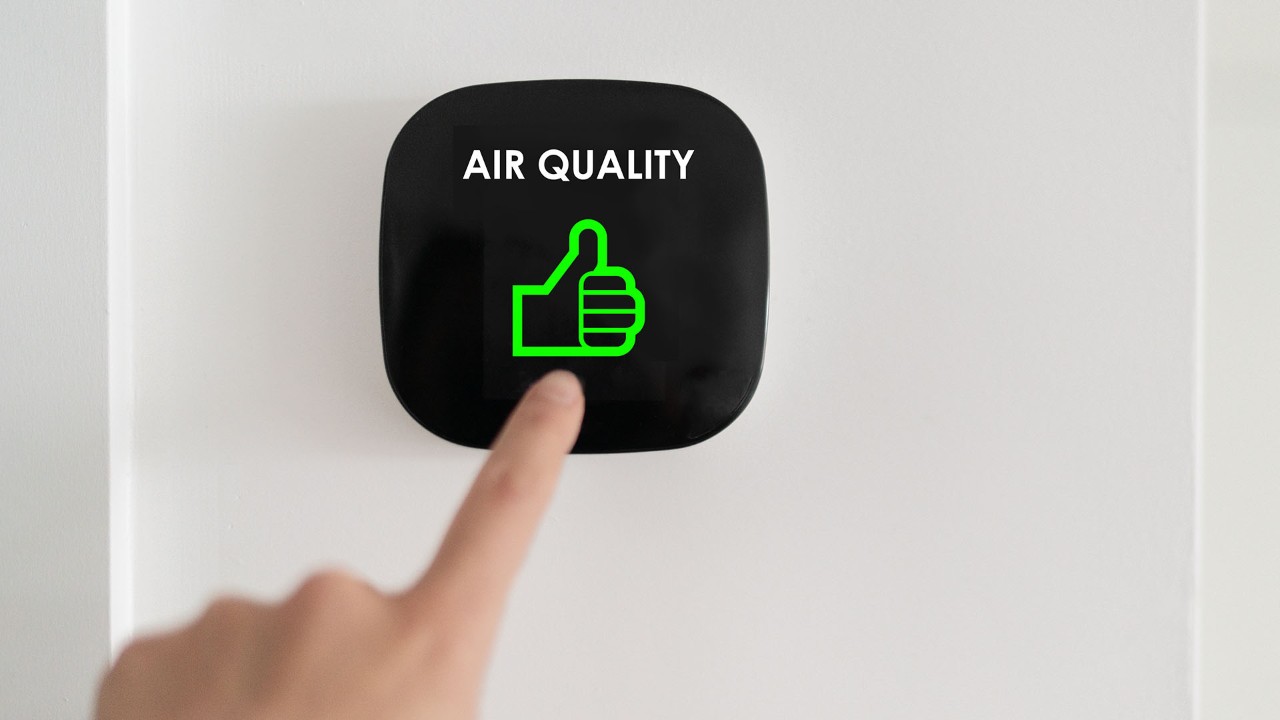
However, it is not easy to accurately assess the actual effectiveness of actions such as opening windows and doors. A system that presents visual data of the performances of air conditions based on the scientific evidence, not intuition, is needed.
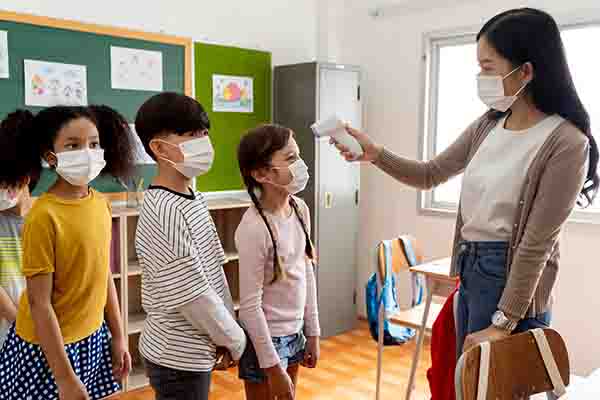
Growing Responsibilities Due to Infection Prevention Measures
If ventilation conditions can be understood numerically, decisions can be made based on the scientific evidence. For example, although opening windows or doors is a simple action, considerations such as temperature control on hot or cold days, noise affecting classes, and security concerns all come into play, which are far more than simply “open or close the window.”
Under these circumstances, decisions about when and how much to ventilate are left to teachers at the site, and responses tend to be based on their intuitions.
Meanwhile, the School Environmental Health Standards clearly define the acceptable CO2 concentration levels in classrooms. Presenting actual data of the ventilation effectiveness enables more efficient and sustainable air-quality management without relying on intuition.
What kinds of initiatives are being implemented in educational settings around the world? The next page introduces advanced examples of CO2 sensor adoption.

About Senseair
Senseair, which became a member of the Asahi Kasei Microdevices (AKM) Group in 2018, is a provider of gas sensors using NDIR: Non-Dispersive InfraRed technology. Our goal is to constantly develop and mass-produce new gas sensor technologies.